
Professionalism that builds trust. Attention to detail at every stage of the transaction.
Professionalism that builds trust. Attention to detail at every stage of the transaction.


Ratings Google
Sales effectiveness
Qualified agents
Clients by recommendation
Polish Real Estate Report · Chapter 1
Poland has emerged as a thriving destination for real estate investors, thanks to its robust economic foundation and steady growth over the past decade. From GDP performance to inflation rates, this report unpacks the key economic indicators influencing Poland's real estate market between 2013 and 2023.
Poland has solidified its position as a key player in the European real estate market. Over the last decade, its robust economy, favorable foreign investment climate, and increasing consumer purchasing power have drawn investors from around the globe.
Between 2013 and 2023, Poland recorded an average annual GDP growth of 3.5%, significantly higher than the OECD average of 1.9%.
Poland's strategic location and diversified economy have supported this robust performance, providing a stable foundation for property investment.

Inflation in Poland has fluctuated over the decade, influenced by both domestic and global factors. The average inflation rate from 2013 to 2022 was 3.4%, slightly above the European Central Bank target of 2%.
Inflation impacts rental income and the rental market by influencing rental yields, which are crucial for real estate investments. Higher inflation can lead to increased rental income, but it also affects demand and rental yields.
A major factor behind elevated inflation was the high price of raw materials and commodities, alongside Russia's invasion of Ukraine, which led to the migration of around 3 million Ukrainian refugees to Poland. Sanctions on Russia disrupted supply chains and raised operating costs, prompting companies to increase prices.

Poland's FDI net inflows averaged 3.2% of GDP from 2013 to 2021, significantly outpacing the EU average of 2.4%.
Poland's ability to attract FDI underscores its stability and appeal as a long-term investment destination. Foreign investors can find lucrative opportunities within the Polish real estate market, while navigating critical legal and tax considerations such as investment regulations and taxation on rental income.

Poland's economy is a beacon of stability in Europe, characterized by consistent growth and resilience. As the largest country in Central and Eastern Europe and the sixth largest in the European Union, Poland has established itself as a robust and attractive market for businesses and investors alike.
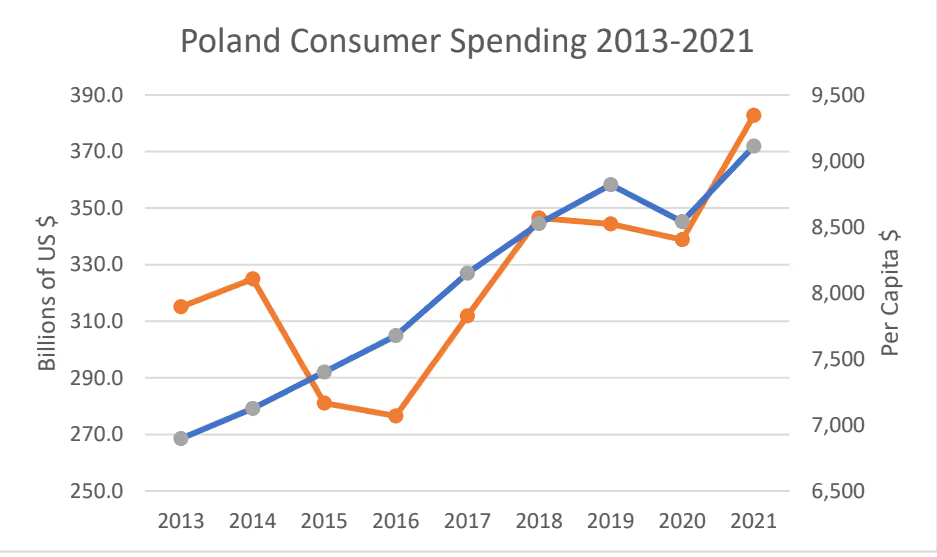
Poland's stable economic environment and growth-oriented policies make it an attractive destination for both foreign and domestic investors. Strong export performance, rising consumer demand, and a diversified economy position Poland as a top choice for long-term investments in real estate, manufacturing, and technology.
Poland has a well-established and transparent legal framework for real estate investment. Operating under a civil law system, the country places strong emphasis on property rights and contractual obligations, providing a secure environment for investors.
Foreign investors enjoy the freedom to buy, sell, and rent out properties, although certain restrictions may apply to specific types, such as agricultural land or properties in sensitive areas. The government has introduced various incentives, including tax breaks and subsidies for specific projects.
Poland maintains a relatively low real estate tax burden compared to other European countries, with rates ranging from 0.2% to 0.5% per annum based on the property's value. A well-developed system of property registration and titling makes securing property rights straightforward.
Poland's economic trends create a favorable environment for various real estate investment opportunities.
Poland's regional real estate markets present a wealth of opportunities for investors. Major cities such as Warsaw, Krakow, and Gdansk serve as bustling hubs for business and commerce, while regional cities like Poznan, Wroclaw, and Lodz are also experiencing significant growth.
Poland's economic resilience, strategic location, and investor-friendly policies make it one of Europe's most attractive real estate markets. By leveraging the insights from this decade-long analysis, investors can confidently navigate Poland's dynamic property market.
Yes, Poland's stable economy, rising consumer demand, and government incentives make it an excellent choice for real estate investors.
Inflation has increased property prices but also boosted rental yields, making real estate a viable hedge against rising costs.
Warsaw, Krakow, Wroclaw, and Gdansk are top choices due to their growing populations and economic activity.
Returns vary by property type and location, but investors can expect rental yields between 4% and 7%.
Poland offers higher growth potential and better affordability compared to Western European markets.
Yes, Poland provides tax incentives and grants for foreign investors, particularly in strategic sectors like real estate and logistics.
 Market Report